
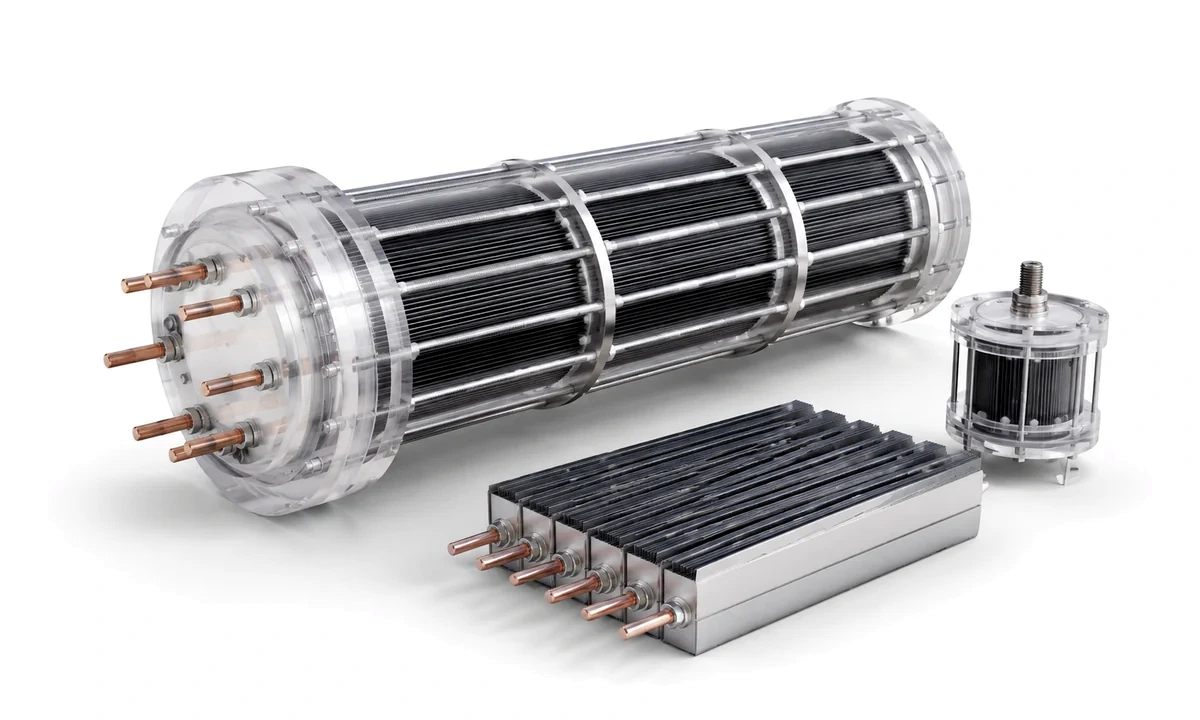
For industrial electrochemical products, communication works best when the product name is linked with application conditions. A customer may ask for a “titanium anode”, “DSA electrode”, “electrolysis cell” or “copper foil equipment”, but the correct configuration depends on the application. The same product family can be used in water treatment, metal recovery, cathodic protection, copper foil production, PCB plating or hydrogen-related electrolysis, and each use case requires a different technical review.
Catalogue names show only part of the process picture
A catalogue name usually describes appearance or material, not the complete operating environment. A titanium mesh anode used in seawater electro-chlorination is not the same as a titanium mesh anode used in wastewater oxidation or cathodic protection. A plate electrode for laboratory testing may have a different design logic from a plate electrode installed in an industrial cell. Without application data, both buyer and supplier may make assumptions that later create technical or commercial gaps.
Application-based questions are more useful
A better discussion starts with the process: What needs to be treated, produced, protected or recovered? What medium is used? What current density and operating schedule are expected? Is the project a new line, an upgrade, a replacement or an early feasibility study? These questions allow the supplier to identify the coating direction, mechanical structure, documents and supply scope more effectively.
For example, a wastewater project should discuss water chemistry, treatment target, pilot testing and full-system configuration. A copper foil project should discuss foil route, target width and thickness, cathode drum, anode cell, dissolution and surface treatment modules. A cathodic protection project should discuss installation environment, design life, current output and cable or canister structure. The product name becomes meaningful only after the application is clear.
Benefits for buyers
- Fewer repeated clarifications: the first quotation can be based on actual conditions instead of guesswork.
- More relevant technical proposal: the recommendation can address coating, geometry, connection and documentation together.
- Clearer supply boundary: both sides can distinguish between electrode-only supply, assembled cells, equipment modules and wider cooperation.
- Lower project risk: performance assumptions, site interfaces and maintenance conditions are discussed earlier.
How to start the conversation
The first message can be simple. A useful enquiry can simply include the application, medium, target output or current density, approximate dimensions, quantity and project stage. If drawings, photos, water analysis or process descriptions are available, they can be shared later to support a more detailed review.
TJNE uses application-based communication to connect industrial electrochemical products with real project conditions. This approach helps overseas customers discuss technical feasibility, product scope and documentation requirements in a clearer and more efficient way.