
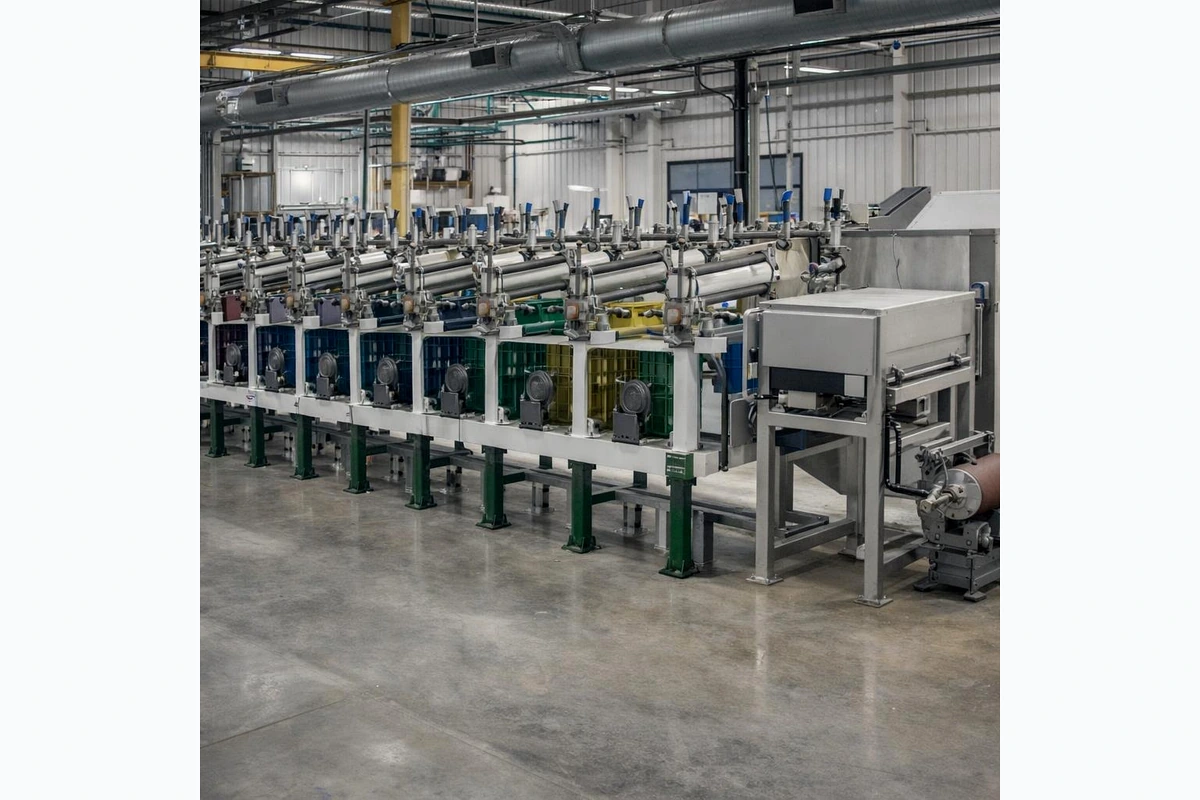
Electrolytic copper foil production is not determined by one single machine. Foil quality, line stability and maintenance planning depend on the coordination of several equipment modules, including cathode drums, anode cells, copper dissolution, raw foil generation, surface treatment, washing, drying, tension control and electrical systems. For project discussion, it is important to identify which module is being requested and how it connects with the rest of the line.
Cathode drum and anode cell
The cathode drum is one of the core modules in a copper foil line. Its surface condition, diameter, width, roundness, cooling and rotation stability all influence foil formation. The anode cell and copper foil anode must work with the drum geometry to support stable current distribution and electrolyte flow. A mismatch between drum specification, anode arrangement and electrolyte conditions can affect thickness uniformity and production stability.
When a customer asks for only a cathode drum or only an anode cell, the existing line interface becomes very important. The supplier needs to know the target foil width, thickness range, line speed, current density range, electrolyte system, installation space and connection arrangement. For new lines, these modules should be discussed together rather than as isolated parts.
Copper dissolution and electrolyte circulation
Copper dissolution supports electrolyte concentration control and long-term line operation. A dissolution tank functions as part of the chemical and hydraulic balance of the foil production process. Acid concentration, copper ion concentration, filtration, temperature control, impurity management and circulation rate all influence the stability of the production line.
In RFQ communication, the customer should clarify whether the project requires a new dissolution system, an upgrade to an existing unit, spare components or integration support. If the existing plant already has tanks and circulation equipment, interface information and process data help define what can be reused and what needs modification.
Surface treatment and downstream modules
Surface treatment determines many application-specific properties of copper foil, including adhesion, roughness, oxidation resistance and handling performance. Treatment routes can differ according to lithium battery foil, PCB copper foil, standard copper foil or PET copper foil-related projects. The required process modules may include cleaning, roughening, anti-oxidation, washing, drying, inspection and winding.
Because surface treatment is closely linked to the final application, the enquiry should explain the target product direction rather than only listing equipment names. Thickness, foil width, production capacity, surface requirement and downstream customer expectations are all useful for the review.
Why module boundaries matter
- Single module supply: suitable for replacement, upgrade or spare-part projects where the existing line interface is clear.
- Module combination: suitable when the customer needs coordinated design across drum, anode cell, dissolution or surface treatment sections.
- Complete line cooperation: suitable for new or expanded copper foil projects where production target, utilities, building interface and commissioning scope are defined.
TJNE’s copper foil equipment communication usually starts by identifying the target foil route, production capacity, requested modules and existing plant conditions. A clear module boundary helps both sides avoid scope misunderstandings and supports a more practical technical proposal.