
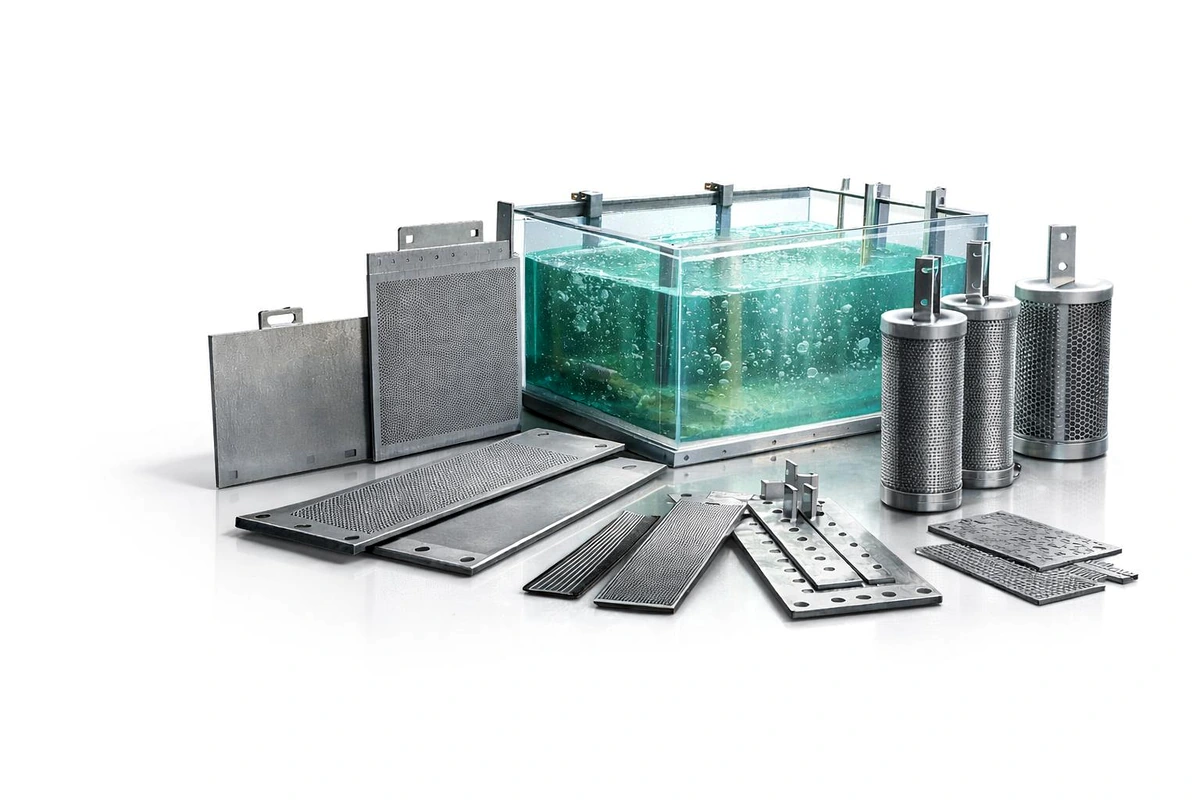
Industrial electrochemical products are rarely selected correctly from a product name alone. The same words — titanium anode, electrolysis cell, functional electrode or copper foil equipment module — can refer to very different configurations depending on the process. A useful technical discussion therefore begins with a small group of practical questions about the application, operating conditions and supply boundary.
What reaction or process should the product support?
The first question is the target function. Is the project designed for chlorine evolution, oxygen evolution, metal recovery, organic oxidation, cathodic protection, copper foil electrodeposition, water disinfection or hydrogen-related electrolysis? Each direction has different requirements for coating, structure, material compatibility and control method. If the reaction target is not clear, it is easy to request a product that looks similar but works under a different electrochemical mechanism.
What is the operating medium?
Medium data should be provided as early as possible. Useful information includes electrolyte composition, chloride concentration, acid or alkali concentration, pH, conductivity, temperature, impurity level, suspended solids and whether the medium changes during operation. For wastewater, a basic water analysis and treatment objective are more useful than only a COD or ammonia-nitrogen number. For seawater or brine, salinity, hardness and scaling risk should be considered.
What are the electrical and mechanical interfaces?
Electrochemical products must fit the power supply and installation space. Key electrical information includes current, current density, voltage range, duty cycle, polarity, busbar design and expected operating hours. Key mechanical information includes dimensions, connection points, sealing surfaces, flow direction, pressure, available installation space and maintenance access. Drawings or photos of the existing equipment are especially helpful for replacement projects.
What supply boundary is expected?
Many misunderstandings come from an unclear boundary between product, component, cell, module and system. A customer may say “electrode” while expecting a complete cell, or say “equipment” while only needing a core module. Before quotation, both sides should clarify whether the request is for electrodes only, an assembled cell, a defined equipment module, spare parts, documentation support or broader project cooperation.
What information improves quotation quality?
- Application and target reaction.
- Operating medium and available analysis data.
- Current density, operating current, voltage and duty cycle.
- Drawings, photos, dimensions and connection details.
- Target quantity, expected timing and required documents.
- Site restrictions, standards, packaging or inspection requirements.
These questions can be answered progressively during the first technical exchange. A short description is enough to start the discussion, but each additional piece of data helps reduce assumptions and improves the accuracy of the technical proposal. TJNE’s review process is designed to connect product selection with real operating conditions, so that the recommendation fits both the chemistry and the equipment interface.